
Revenue Intelligence Tools 2026: Best Platforms for Pipeline Visibility
Explore top revenue intelligence tools 2026, key platforms, and how to improve pipeline visibility, forecasting, and revenue growth.
 By Divyesh Savaliya
Revenue teams today aren’t struggling with a lack of data; they’re struggling with a lack of clarity. Every interaction, update, and signal is captured somewhere, but it’s scattered across tools and nearly impossible to piece together in real time. What looks like a healthy pipeline on the surface often hides risks that only show up when it’s too late.
This is not a sales execution problem. It is a pipeline visibility problem, and it is exactly what revenue intelligence tools are built to solve.
In 2026, revenue intelligence has evolved from a niche add-on to a strategic layer that sits above your CRM and transforms scattered signals — call transcripts, email engagement, CRM updates, intent data, buying signals into actionable guidance your entire go-to-market team can act on. The platforms that get this right are not just improving forecasts. They are fundamentally changing how revenue teams operate.
This guide covers what revenue intelligence tools actually do, why they matter more in 2026 than ever before, the top platforms your team should evaluate, and how to choose the right one for your stage.
What Revenue Intelligence Tools Actually Do (And Why CRM Alone Is Not Enough)
Revenue intelligence platforms sit above your CRM. They pull in data from multiple sources — your CRM, sales engagement tools, email, call recordings, intent data providers, and market signals — and use AI to uncover patterns, risks, and opportunities that no static dashboard can show.
The problem they solve is fundamental: most pipeline data is wrong by the time it reaches leadership.
According to research from MarketsandMarkets, up to 79% of deal-related data collected by sales reps never makes it into the CRM. Deals remain in the wrong stage. Closed dates go stale for weeks. Key stakeholders change jobs mid-cycle. The pipeline reports leadership depends on for projections are often a lagging, inaccurate picture of reality.
The consequences are measurable. Gartner research shows that 55% of sales leaders do not have a high degree of confidence in their forecast accuracy, and only 7% of sales organizations achieve forecast accuracy of 90% or higher (MarketsandMarkets, 2025). Meanwhile, Gartner's "Future of Sales" research predicts that by 2026, over 60% of B2B sales teams will use ML-derived intent scoring as a core component of pipeline qualification.
Revenue intelligence tools close this gap by automating data capture, continuously scoring deal health, surfacing early-warning signals, and giving every stakeholder, from frontline reps to CROs, a real-time view of what the pipeline actually looks like.
This connects directly to the sales pipeline velocity discipline we cover on Marketricka. Velocity-driven revenue organizations need accurate, real-time pipeline data as the foundation. Without it, velocity calculations are built on fiction.
The Revenue Intelligence Market in 2026: Why This Category Is Exploding
The adoption curve for revenue intelligence tools is rapid, and the market data explains why.
The global Revenue Intelligence Platform market was valued at $1.2 billion in 2024 and is growing at a 12.8% CAGR, projected to reach $3.5 billion by 2033, according to Verified Market Reports. A separate estimate from Custom Market Insights puts the broader revenue intelligence market at $3.8 billion in 2024, growing to $10.7 billion by 2033 at a 12.1% CAGR.
The forces driving this growth are clear:
67% of sales operations leaders agree that creating accurate forecasts is harder today than three years ago (MarketsandMarkets via Gartner research)
75% of enterprises are projected to use revenue intelligence tools for decision-making by 2025, up from a small minority in 2022 (Gartner, via ZipDo Industry Report)
Companies using revenue intelligence see 20–30% higher revenue growth and 25–30% higher sales productivity (Harvard Business Review and Gartner, via ZipDo)
Revenue intelligence platforms can reduce forecast errors by up to 50% compared to traditional spreadsheet-based approaches (MarketsandMarkets, 2025)
In December 2025, Gartner published its first-ever Magic Quadrant for Revenue Action Orchestration, formally recognizing the convergence of sales engagement, conversation intelligence, and revenue intelligence into a single strategic category. This is a significant signal — analyst recognition at this level indicates the category has reached enterprise mainstream.
The Top Revenue Intelligence Tools in 2026: What Each Platform Does Best
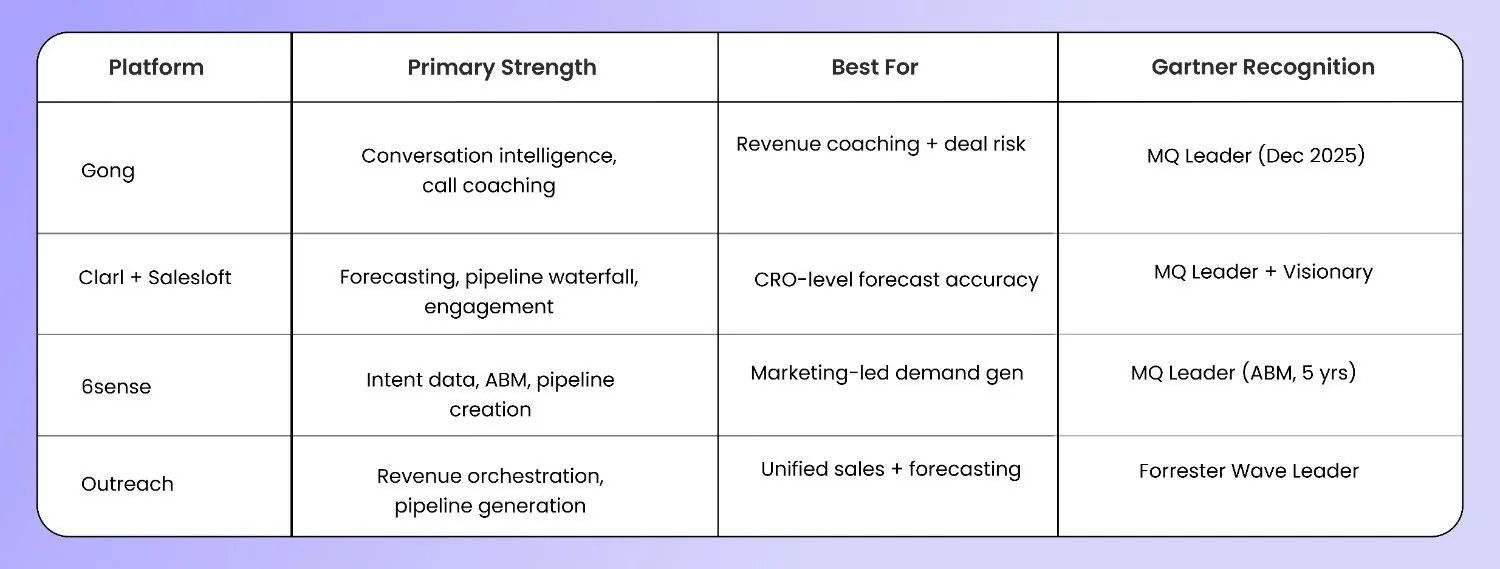
The revenue intelligence landscape in 2026 is consolidating fast. The Clari–Salesloft merger closed in December 2025, and Gartner published its inaugural Magic Quadrant for the category the same month. Here is an honest breakdown of the leading platforms by use case.
1. Gong — Best for Conversation Intelligence and Coaching
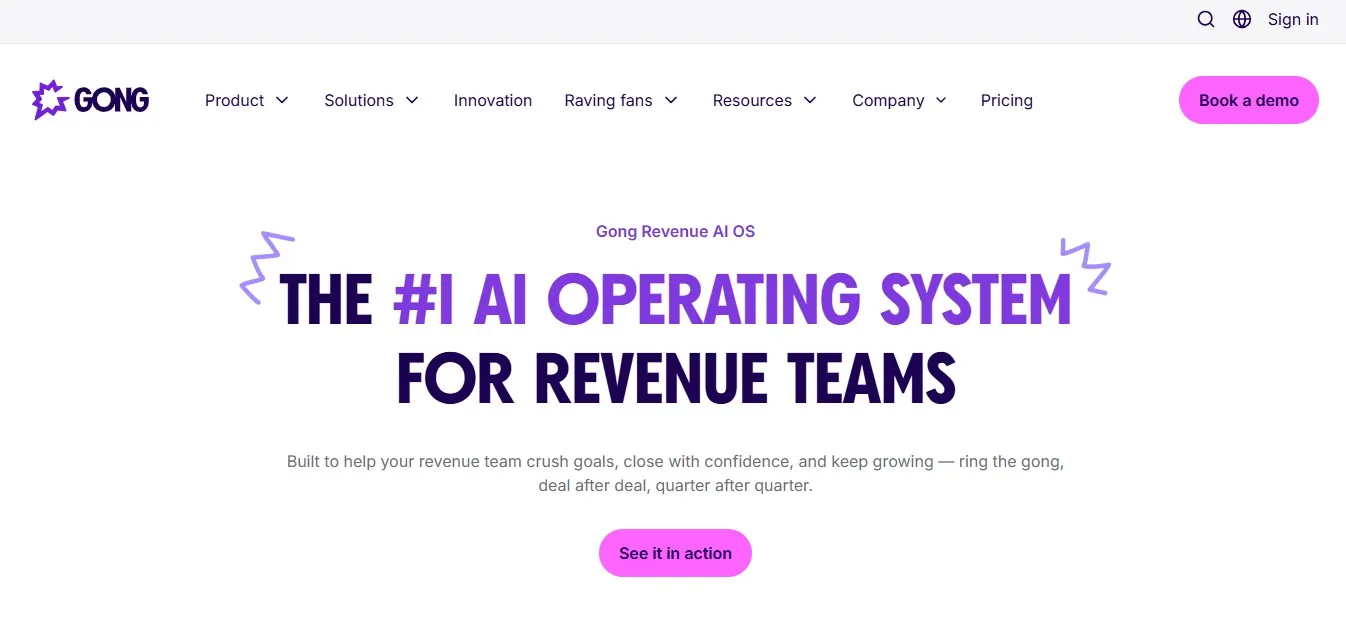
Gong is the category leader in conversation intelligence, now positioning itself as the "Revenue AI Operating System." Its Revenue Graph captures every interaction across 70+ languages, trained on 3.5 billion+ sales interactions. Gong surpassed $300 million ARR in January 2025 (28% year-over-year growth) and was named a Leader in the inaugural Gartner Magic Quadrant for Revenue Action Orchestration, placed highest on both completeness of vision and ability to execute axes (Tellius Revenue Intelligence Platform Comparison, 2026).
Its AI Briefer reportedly drives a 19% increase in win rates by surfacing deal risks and coaching opportunities from real call data. Forrester has also named Gong the leader in conversation intelligence.
Best for: Revenue teams where coaching quality, call analysis, and deal risk scoring from conversation data are the primary use cases.
2. Clari (now merged with Salesloft) — Best for Forecasting Rigor
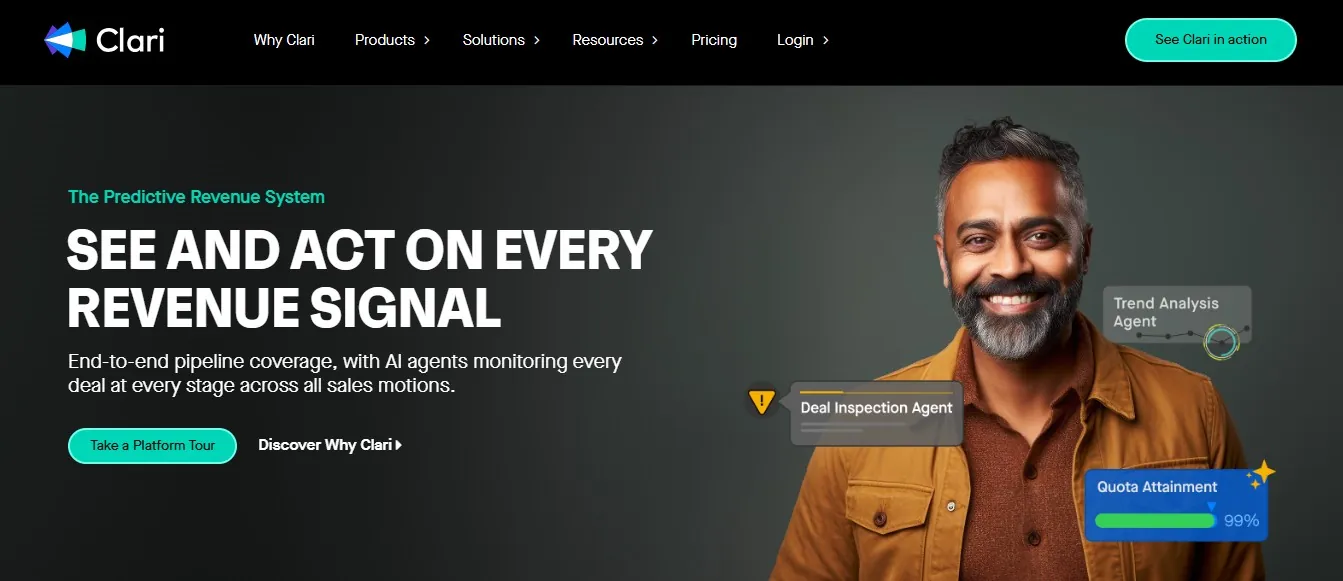
Clari's Waterfall analytics — tracking pipeline movement as new deals, slippage, pull-ins, and push-outs is widely considered the gold standard for revenue leadership forecasting. Its forecasting engine, trained on historical CRM data, delivers accuracy that enterprise customers report within 3–4% of actual outcomes every quarter. Revenue teams using Clari have reported knowing in week two of the quarter where they will land in week 12 with 96%+ accuracy (Clari, citing Gartner research).
The December 2025 merger with Salesloft combines forecasting depth with sales engagement execution, a significant move that makes the combined platform a full-cycle revenue intelligence and engagement solution.
Best for: Revenue operations and CRO teams who need pipeline waterfall visibility, precise forecasting, and execution in one platform.
3. 6sense — Best for Intent-Led Pipeline Creation
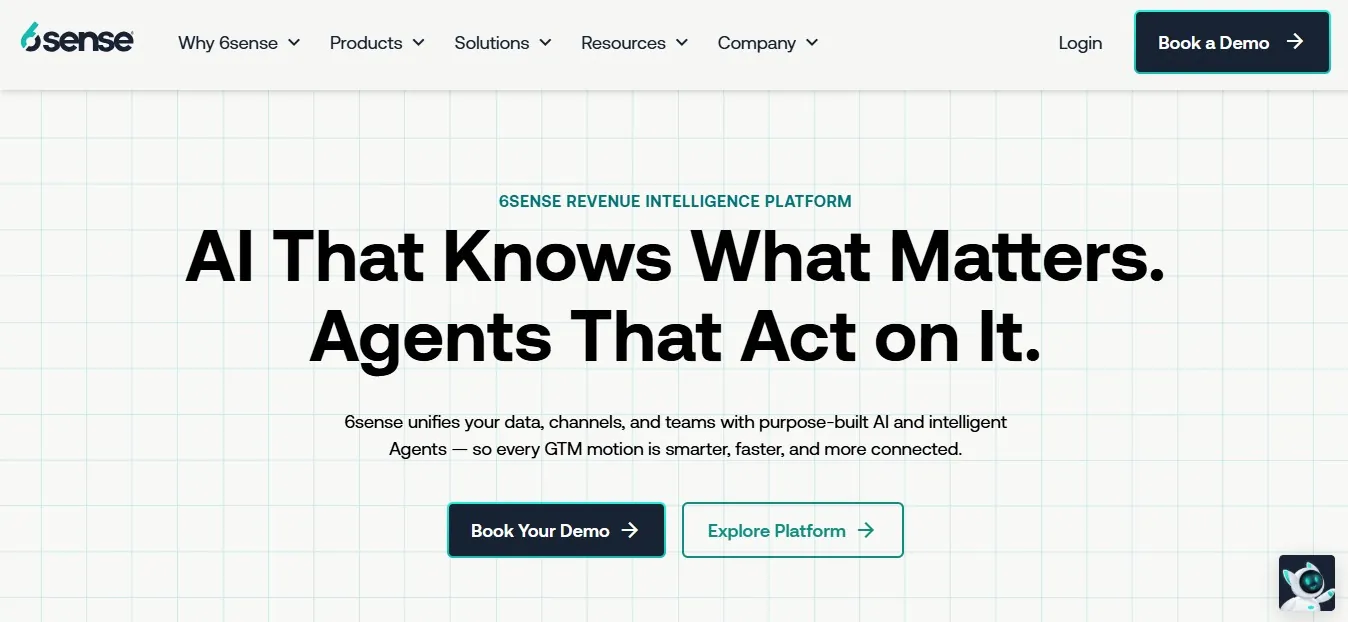
6sense operates at the top of the revenue intelligence stack. It identifies in-market accounts through predictive analytics and buying committee behavior before they ever raise their hand. Named a Gartner Magic Quadrant Leader for ABM Platforms five consecutive years, 6sense combines intent data with account scoring, advertising orchestration, and sales activation in one system.
Its strength is in pipeline creation, not pipeline management — making it the ideal complement to platforms like Gong or Clari that focus on deals already in the funnel. Understanding how intent data integrates with your revenue intelligence workflow is explored in detail in our guide on B2B Intent Data Platforms: Top Tools to Find In-Market Buyers.
Best for: Marketing-sales alignment teams running ABM programs who need predictive account identification and intent-driven pipeline creation.
Quick Comparison of Leading Platforms
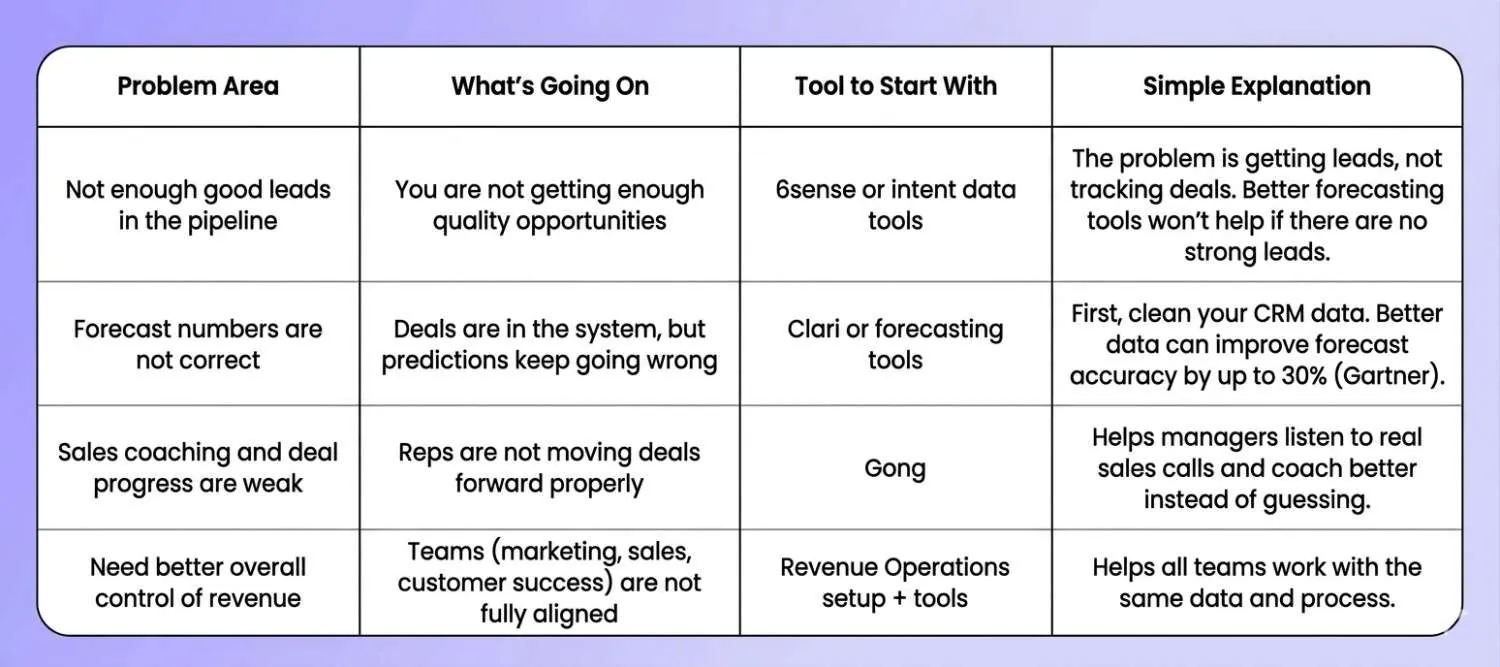
How to Choose the Right Revenue Intelligence Tool for Your Team
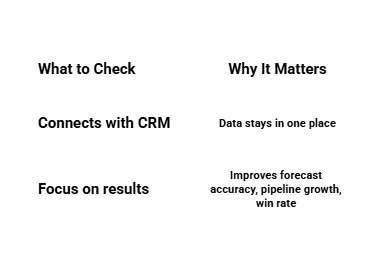
Before You Pick a Tool
Revenue Intelligence and RevOps: They Work Best Together
Revenue intelligence tools are not a standalone solution. They are the data and visibility layer that makes Revenue Operations actually work in practice.
Without good revenue intelligence, your RevOps team is managing a process they cannot fully see. Without good RevOps, your revenue intelligence platform will surface signals that nobody has the process or accountability to act on. The two are mutually dependent, and together, they are what separates revenue teams with 87% forecast accuracy from the majority of teams operating at 52% (First Page Sage Pipeline Velocity Research).
This alignment data flowing from cold outreach through pipeline stages to closed revenue also connects your cold email strategy and your sales pipeline velocity metrics into one coherent revenue system. Revenue intelligence is the connective tissue that makes all of it visible and actionable.
Final Thought: Visibility Is the Revenue Advantage
Revenue intelligence tools in 2026 represent a shift from reactive pipeline management to proactive revenue engineering.
Instead of discovering problems at the end of the quarter when it is too late to do anything about them, you build a system where risks surface in week two, coaching happens from real data, forecasts reflect reality, and every team member can see the same picture at the same time.
This is not just a technology upgrade. It is a competitive advantage.
Revenue teams that invest in pipeline visibility today are building something their competitors cannot quickly replicate:
Forecasts that hold up in board conversations, grounded in real engagement data
Deal risks identified early enough to intervene and recover
Coaching that scales because it is based on patterns, not gut feel
Marketing spend directed at accounts that revenue intelligence confirms are in-market
In a market where only 7% of sales organizations achieve 90%+ forecast accuracy, your competitive edge is simple: see your pipeline more clearly than anyone else and act on what you see while there is still time to change the outcome.
If your current tools give you a CRM snapshot but not real pipeline intelligence, you are flying blind through the quarter.
Need more easy ideas you can actually use? Visit the Marketricka blogs and discover simple tips to get started quickly.