
Channel Marketing Automation 2026 Guide
Learn channel marketing automation 2026 strategies, PRM tools, and partner marketing tips to scale revenue through strong alliances.
 By Divyesh Savaliya
Many of the fastest-growing B2B companies in 2026 share one big advantage: a strong partner network that brings in 30–50% of their revenue without needing to spend heavily on ads or hire large teams.
That’s the power of a good partner marketing strategy. But there’s a big difference between a partner program that drives real growth and one that wastes time and resources. The key difference is automation.
Today, channel marketing automation helps businesses manage partners more easily and at scale. Companies can quickly onboard new partners, run co-branded campaigns automatically, manage MDF funds efficiently, and track partner-driven sales just like they track digital ads, all from one platform.
This guide will walk you through everything you need to know, including the latest market trends, how automation works, the best platforms to use, and a step-by-step plan to turn your partner network into a steady revenue source.
Why Partner Marketing Is a 2026 Growth Priority
The cost of getting B2B customers directly through ads and brand-owned channels is becoming more expensive and less effective. Paid ads cost more, sales cycles are longer, and organic reach keeps dropping. Because of this, many businesses are now focusing on partner and channel marketing.
Instead of doing all the selling themselves, companies build a network of trusted partners such as resellers, agencies, technology partners, and service providers, who help promote and sell their products to their own audiences.
Here are the three main reasons why this approach is growing so fast in 2026:
1. Lower Customer Acquisition Costs
As online advertising becomes more expensive and privacy changes make targeting harder, partner-generated leads are becoming more valuable. These leads often come through trusted recommendations, so they are usually more qualified and easier to convert into customers.
2. Buyers Trust Ecosystems More
Today’s B2B buyers don’t just look at one product alone. They prefer solutions that work well with other platforms they already use. Businesses are more likely to trust vendors that have strong integrations, marketplace presence, and reliable implementation partners.
3. Better Automation Tools
Partner Relationship Management (PRM) platforms have improved a lot in recent years. Tasks that once required a lot of manual work, like onboarding partners, managing campaigns, and tracking revenue, can now be automated easily. This makes partner marketing practical not only for large enterprises but also for mid-sized companies.
Together, these changes are making channel marketing automation one of the smartest growth investments for modern B2B companies. It helps businesses scale faster, reduce marketing costs, and build long-term revenue through strong partner networks.
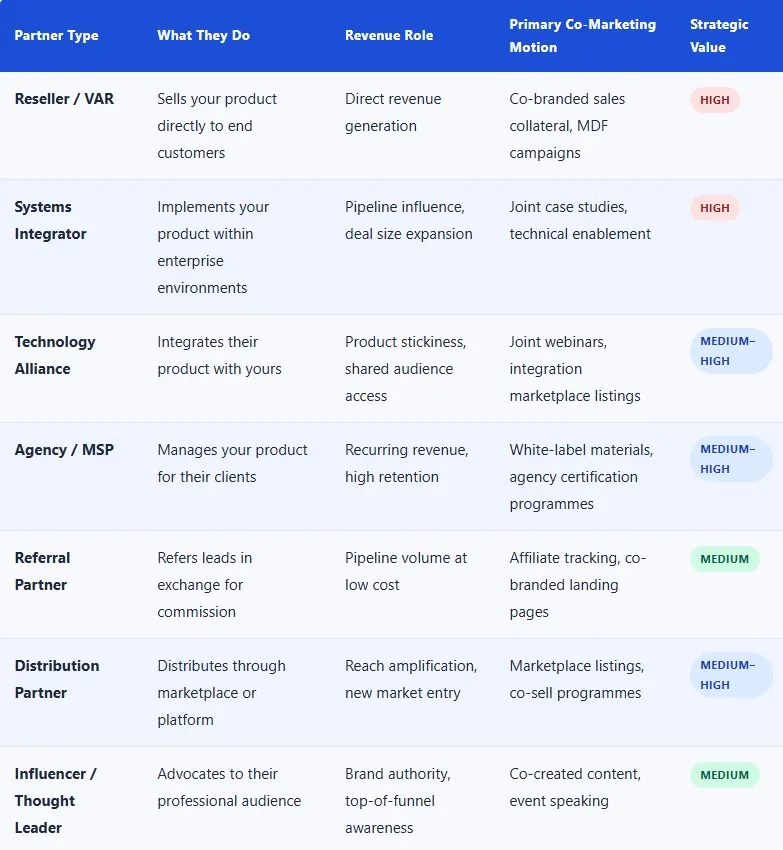
The B2B Partner Ecosystem: Types & Revenue Roles
Not all partners are created equal, and building an effective partner marketing strategy starts with understanding which partner types drive which commercial outcomes. Each has a distinct role in the revenue engine.
The 5 Pillars of Channel Marketing Automation
In 2026, successful channel marketing automation is not just about using one tool. It’s a complete system made up of five important parts. Each part helps remove common problems in managing partner programs and makes the entire process faster and more efficient.
1. Automated Partner Onboarding
Automation helps businesses onboard new partners quickly and smoothly. Instead of spending months training and setting up partners manually, companies can use self-service training portals, certification programs, and automated welcome emails to get partners ready faster.
2. Through-Channel Marketing Automation (TCMA)
Businesses can provide ready-to-use marketing materials like email campaigns, social media posts, ads, and landing pages that partners can customize and launch easily. This helps partners market products faster while keeping the brand message consistent everywhere.
3. MDF Management Automation
Managing Market Development Funds (MDF) manually can take a lot of time. Automation makes it easier by handling fund requests, approvals, budget tracking, and ROI reporting automatically. This helps companies use marketing budgets more efficiently and track how funds contribute to sales.
4. Deal Registration & Pipeline Tracking
Automated deal registration systems give businesses clear visibility into partner-generated sales opportunities. CRM integrations help track deals in real time, reduce conflicts between partners, and identify upsell opportunities without manual work.
5. Partner Performance Insights
AI-powered dashboards help businesses track partner activity, performance, certifications, MDF usage, and revenue contribution. Automation can also re-engage inactive partners and identify top-performing partners for rewards or promotions.
Together, these five areas help turn a partner program into a scalable and reliable revenue channel instead of a time-consuming management task. Businesses can grow faster, improve partner relationships, and create an effective sales growth strategy.
PRM Platforms: The Engine of Partner Scale
A Partner Relationship Management (PRM) platform is one of the most important tools for running a successful partner marketing program. Just like a CRM helps manage direct sales, a PRM platform helps businesses manage their partner network, automate tasks, and track partner-driven revenue more efficiently.
What a Modern PRM Platform Does
1. Partner Portal
A PRM platform gives partners a dedicated self-service portal where they can access training materials, marketing assets, deal registration forms, and performance reports anytime without needing constant support from your team.
2. Automated Partner Onboarding
New partners can go through structured training, certification programs, and onboarding steps automatically. This helps them learn faster and start generating sales without requiring manual guidance from your staff.
3. Campaign Management
With through-channel marketing automation (TCMA), partners can easily launch co-branded marketing campaigns using ready-made templates for emails, ads, social media posts, and landing pages while still following your brand guidelines.
4. MDF Management
PRM platforms simplify Market Development Fund (MDF) management by automating requests, approvals, budget tracking, and reporting. This removes the need for long email chains and spreadsheets and makes the entire process more organized and transparent.
5. CRM Integration
Modern PRM platforms connect directly with CRMs like Salesforce or HubSpot. This allows sales and revenue teams to see partner-generated leads, deals, and pipeline updates in real time.
6. Analytics & Performance Tracking
PRM platforms provide dashboards and reports that show partner performance, engagement levels, sales contribution, and future pipeline forecasts. AI-powered insights can also help identify top-performing partners and areas that need improvement.
Overall, a PRM platform helps businesses manage partners more efficiently, improve collaboration, and scale partner-driven revenue with less manual work.
Partner Revenue Attribution: Proving the ROI
The most common reason partner marketing budgets get cut is the same reason influencer and community budgets get cut: inability to demonstrate revenue attribution. In 2026, this is a solvable problem, but it requires deliberate infrastructure built before campaigns launch.
A Three-Layer Attribution Architecture
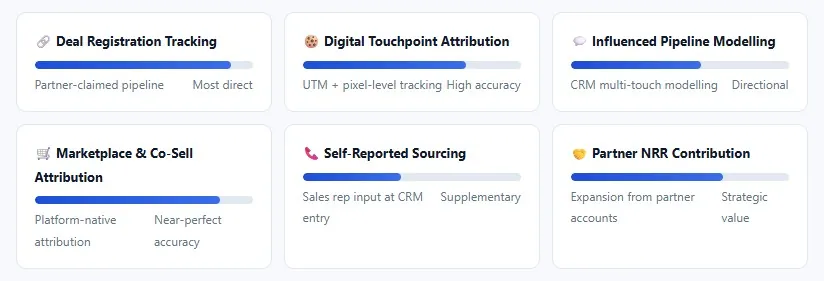
The strongest partner attribution programmes use all six layers simultaneously, with deal registration and digital tracking forming the measurement spine, and influenced pipeline modelling filling the gaps. This architecture feeds directly into the revenue reporting that connects channel marketing automation to business outcomes, and integrates with the broader SEO and performance measurement infrastructure your team already runs.
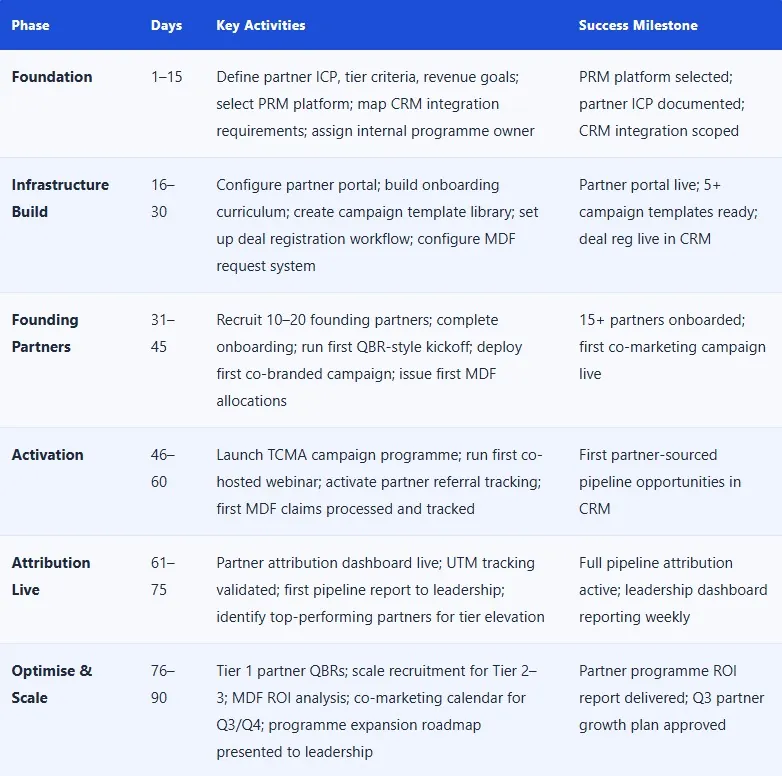
Your 90-Day Partner Programme Launch Framework
Whether you're launching a new programme or automating an existing one, this 90-day framework gives you a structured path from planning to revenue attribution — the operational backbone of any serious channel marketing automation initiative.
Critical Pitfalls to Avoid
1. Recruiting Partners Before Infrastructure Exists
One of the biggest mistakes companies make is bringing in partners before their onboarding process, campaign tools, and deal tracking systems are fully set up. If partners face confusion or a poor onboarding experience in the beginning, they often lose interest quickly. Negative experiences can also spread fast within partner communities. That’s why it’s important to build your partner portal, campaign templates, and tracking systems before recruiting partners.
2. Treating All Partners Identically
Not all partners have the same value or potential. Using the same strategy for every partner can waste both time and resources. High-performing strategic partners need more support and collaboration, while smaller referral partners may need a simpler engagement model. Creating partner tiers helps businesses focus their efforts where they can generate the best results.
3. MDF Without Traceability
Providing Market Development Funds (MDF) without tracking how the money is used can quickly waste marketing budgets. Every MDF request should include a clear campaign plan and proper tracking methods. After the campaign, partners should submit reports showing how the budget was spent, campaign reach, leads generated, and sales impact. Without proof of results, future funding should not be approved.
4. Disconnecting Partner Programme from Direct Sales
Partner-generated leads often underperform when there is poor coordination between partner teams and direct sales teams. Sales teams need clear visibility into partner-generated opportunities, proper follow-up processes, and shared goals. Without strong communication and alignment, channel conflicts can damage the entire partner program.
5. Measuring Activity Instead of Revenue
Partner portal logins, certification completions, and campaign kit downloads are leading indicators, not outcomes. The metric that matters is a partner-sourced and partner-influenced pipeline, tracked at the deal level and reported weekly. Teams that report activity metrics to leadership lose budget; teams that report revenue attribution get it doubled. This is the same revenue-accountability principle that underlies every great B2B sales growth strategy.
Conclusion
In conclusion, channel marketing automation is no longer optional; it's a critical growth system for B2B companies looking to scale efficiently in 2026. Businesses that move beyond manual partner management and invest in structured systems like PRM platforms, automation workflows, and clear attribution models will be able to turn their partner networks into consistent, revenue-generating engines.
Ultimately, the companies that win will be the ones that treat partner marketing as a core revenue strategy, not a side activity. By focusing on automation, accountability, and performance tracking, they can reduce wasted effort, improve partner productivity, and build a scalable, long-term competitive advantage.
Looking for easy tips? Explore Marketricka blogs for simple and useful ideas.