
Marketing Automation ROI: How to Track & Improve
Track and improve marketing automation ROI with key metrics, proven strategies, and optimization tips to boost revenue and efficiency.
 By Divyesh Savaliya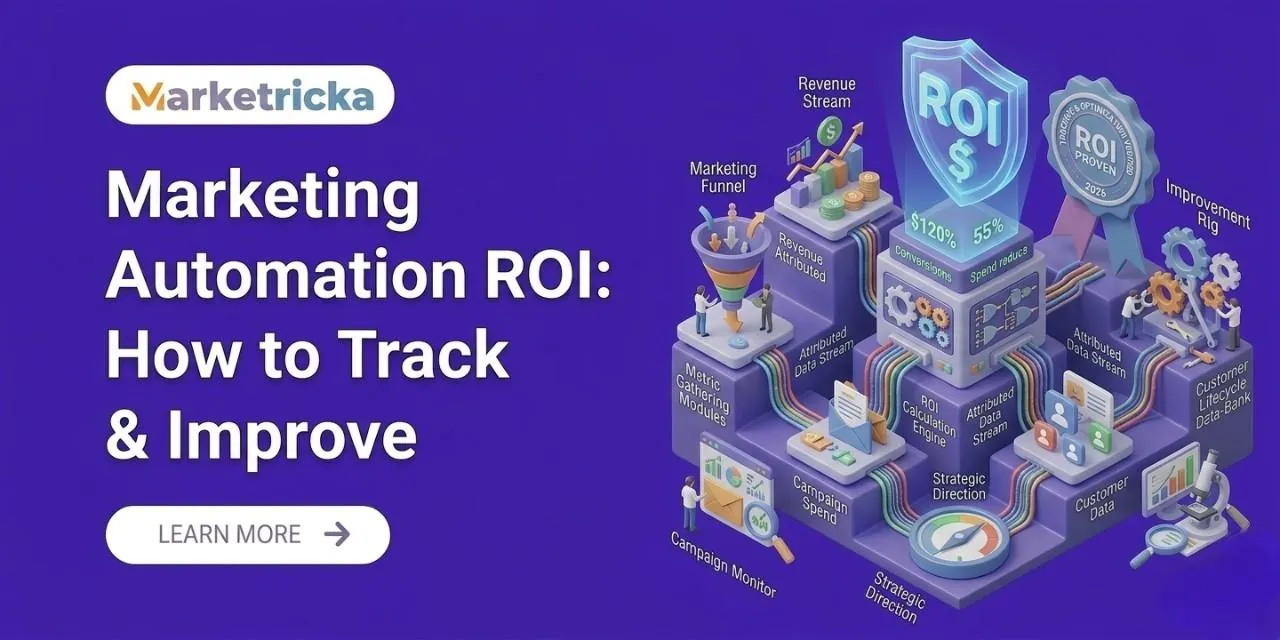
Marketing automation is no longer just about saving time; it is directly tied to revenue growth and performance. Businesses that invest in automation consistently see measurable outcomes. On average, companies generate around $5.44 for every $1 spent on marketing automation, which translates to a return of more than 500%.
Beyond revenue, automation also improves efficiency. Studies show a 14.5% increase in sales productivity and a noticeable reduction in marketing overhead when automation is implemented effectively.
But here’s the real challenge: while most businesses use automation, many still struggle to measure ROI clearly and improve it over time. That’s exactly what this guide will help you fix.
What Marketing Automation ROI Actually Means
Marketing automation ROI is not just a number you calculate at the end of a campaign. It is a way to understand whether your automation efforts are actually contributing to revenue and business growth.
At its core, marketing automation ROI measures the relationship between what you invest and what you get back. This includes the cost of tools, campaign execution, and team effort, compared to the revenue generated from automated campaigns such as email sequences, lead nurturing workflows, and retargeting strategies.
A simple way to look at it is:
ROI = (Revenue from automation – Cost of automation) / Cost of automation
However, in real scenarios, ROI goes beyond direct revenue. It also includes improvements in lead quality, faster conversions, and better customer engagement. For example, businesses using automation for lead nurturing have reported up to a 451% increase in qualified leads, which directly impacts long-term revenue.
This is why marketing automation ROI should be seen as a performance indicator, not just a financial metric. It tells you whether your campaigns are working, whether your targeting is accurate, and whether your customer journey is aligned with user intent.
How to Track Marketing Automation ROI
Tracking ROI becomes much easier when you focus on the right metrics instead of trying to measure everything at once. The goal is to connect marketing activity with actual business outcomes.
Start by identifying where your revenue is coming from. Every automated campaign, whether it’s email marketing, lead nurturing, or onboarding, should be tied to a measurable result. This could be conversions, sales, or qualified leads entering your pipeline.
The most important metrics to track include:
Lead-to-customer conversion rate:
This shows how many leads generated through automation actually turn into paying customers. A higher conversion rate indicates better targeting and nurturing.Customer acquisition cost (CAC):
This helps you understand how much you are spending to acquire each customer through automated campaigns.Revenue per lead:
Instead of focusing only on volume, this metric shows the value each lead brings to your business.Engagement metrics (open rates, clicks, interactions):
These signals indicate whether your automation workflows are resonating with your audience.Sales cycle length:
Automation often reduces the time it takes to convert leads into customers, which directly improves ROI.
To make tracking easier, most businesses rely on CRM and automation platforms that connect marketing activities with sales outcomes. When your system is integrated properly, you can follow a lead from the first interaction all the way to conversion, giving you a clear picture of what’s working.
How to Improve Marketing Automation ROI
Tracking ROI is only the first step. The real impact comes when you actively improve it. Many businesses set up automation workflows and leave them unchanged for months, which limits their potential.
Improving ROI requires continuous optimization, and it usually comes down to a few key areas.
1. Focus on better lead quality instead of lead volume
More leads do not always mean more revenue. Automation works best when it targets the right audience. By refining your segmentation and focusing on high-intent users, you can improve conversion rates without increasing acquisition costs.
2. Strengthen your lead nurturing workflows
Automation is most effective when it guides users through a journey rather than pushing for immediate conversions. Well-structured workflows that educate, engage, and build trust can significantly improve results. Businesses using structured lead nurturing often see both higher engagement and stronger conversion outcomes.
3. Improve personalization across campaigns
Generic messages rarely perform well. Automation allows you to tailor communication based on user behavior, preferences, and past interactions. This level of personalization increases relevance and improves engagement, which directly impacts ROI.
4. Optimize timing and frequency
Sending too many messages can overwhelm users, while sending too few can reduce engagement. Finding the right balance ensures that your audience stays interested without feeling overloaded.
5. Test and refine continuously
One of the biggest advantages of marketing automation is the ability to test different approaches. Small changes in subject lines, content, timing, or CTAs can significantly impact performance. Consistent testing helps you identify what works best and improve your ROI over time.
6. Align marketing and sales teams
When marketing and sales teams work together, the entire process becomes more efficient. Automation should not stop at lead generation. It should continue through qualification and follow-up, ensuring that high-quality leads are handled effectively.
Companies that align their teams often experience 15–25% higher ROI because they reduce friction in the conversion process and improve overall efficiency.
Wrap-Up
Marketing automation delivers strong results, but only when it is tracked and optimized properly. From improving lead quality to shortening sales cycles, every small improvement adds up to a measurable impact on revenue.
If you want to get more value from your automation efforts, focus on clarity, consistency, and continuous improvement. And if you need help building or optimizing your automation strategy, the Marketricka team can help you align your campaigns, tracking systems, and sales processes to drive better ROI.