
Email Automation Workflows That Convert (With Templates)
Learn high-converting email automation workflows with templates. Build welcome, cart recovery, nurture, post-purchase and win-back emails.
 By Divyesh Savaliya
Email remains one of the most reliable ways to move someone from interest to action. Even with new channels, automation still drives some of the highest returns. Most reports show that email automation increases conversions by 2–3x compared to manual campaigns because the messages arrive at the right time, in the right sequence, and match where the customer is on their journey. When a user receives an email that aligns with their behaviour, whether they just subscribed, abandoned a cart, or bought something, the conversation feels natural rather than forced.
The goal of this guide is to help you build automation that does not feel mechanical. Good workflows feel thoughtful, well-timed, and purposeful. They build trust before they push for action. And when done well, they turn passive subscribers into loyal buyers without overwhelming them.
What Makes an Email Automation Workflow Convert
The success of any automated email depends on a few practical elements. These are not “marketing tricks”; they are fundamentals that make the workflow feel personalised and timely. Here is what improves conversions:
1. A meaningful trigger
Every workflow starts because the customer did something like subscribed, viewed a product, added something to the cart, or purchased. The better your triggers reflect real behaviour, the better your automation performs.
2. Timing that matches intent
A welcome email within 30 minutes feels warm. An abandoned cart reminder after 30 hours feels too late. Timing directly affects whether the user feels understood.
3. Segmentation that keeps messages relevant
Grouping people by interest, behaviour, or purchase history helps the message feel aligned with who they are. Even basic segmentation improves conversion rates by 30–50% in many studies.
4. Personalisation that feels natural
Not just a first name, but:
product they viewed
last purchase date
interest category
content preference
5. A clear, simple message
Emails that convert usually make one clear point instead of trying to do everything in one shot. A single offer or a single purpose maintains clarity.
High-Converting Email Automation Workflows (With Templates)
Every strong email automation strategy relies on a few core workflows that guide users through their journey in a way that feels personal, intentional, and helpful. Below are the five workflows that consistently deliver conversions across industries, each explained with a flow, a table, and a ready-to-use template.
Workflow 1: Welcome Flow
Best for: New subscribers, new trial users, first-time visitors
Goal: Create connection, spark interest, introduce value, guide early actions
A good welcome flow feels warm and clear. It helps new subscribers understand what to expect and builds early trust. Welcome emails have the highest open rates among all automation flows (usually 50–60%), making this the perfect moment to guide users into your world.
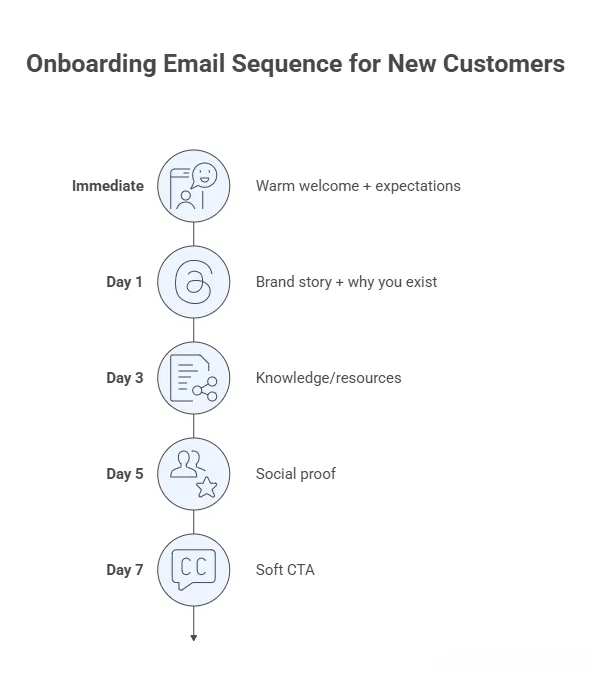
Flow Structure (3–5 emails)
Email 1: Warm welcome + what they can expect
Email 2: Introduce brand story + core value
Email 3: Link to the most helpful resources or product categories
Email 4: Testimonials + social proof
Email 5: A soft CTA or low-commitment offer
Summary Table
Email Template (Email 1 – Warm Welcome)
Subject: Welcome, here’s what comes next
Body:
Hi {{name}},
Thanks for joining us. We send emails when we have something genuinely useful to share not just to fill your inbox. Over the next few days, I’ll send you a few short emails that introduce our brand and help you get the most out of what we offer. Glad to have you here.
Workflow 2: Abandoned Cart Flow
Best for: Ecommerce and service-based products
Goal: Recover lost sales, address hesitation, reinforce value
Abandonment happens for many reasons, such as distractions, uncertainty, and price hesitations. A thoughtful abandoned cart flow gently brings users back without pressure. These flows typically recover 15–25% of abandoned carts.
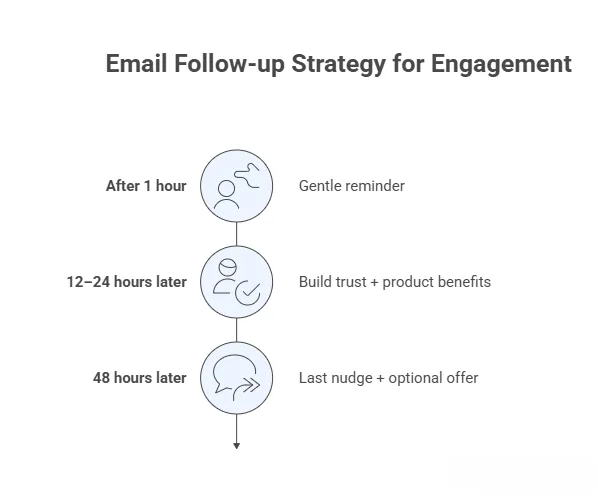
Flow Structure (3 emails)
Email 1: Friendly reminder
Email 2: Benefits, reviews, or product highlights
Email 3: Last reminder, optional incentive
Summary Table
Email Template (Email 1 – Friendly Nudge)
Subject: Want us to keep this aside for you?
Body:
Hi {{name}},
Looks like you left something in your cart. If you were still thinking about it, we saved it for you. Here’s your link to pick up where you left off. If you change your mind, no worries, it happens to all of us.
Workflow 3: Lead-Nurture Drip
Best for: SaaS, agencies, coaches, consultants
Goal: Build trust, educate the user, and move them towards a decision
Lead nurturing works because it guides users through the decision-making process gradually. Instead of selling immediately, you build trust through value and relevance.
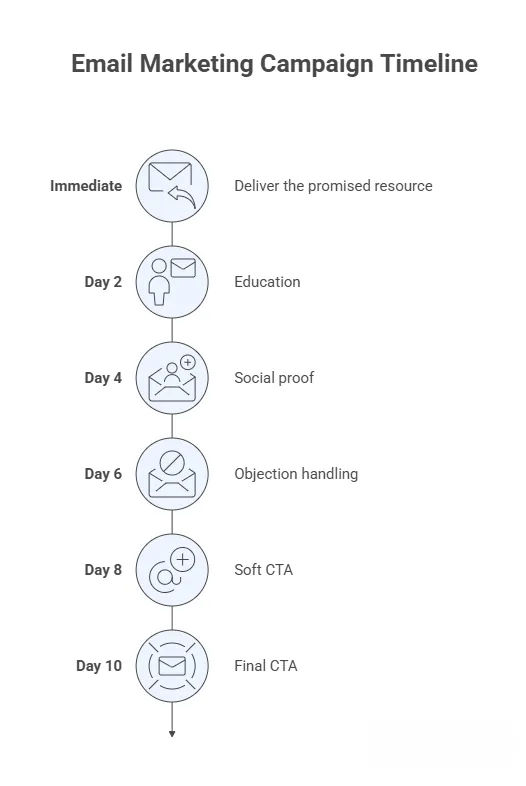
Flow Structure (4–6 emails)
Email 1: Deliver resource
Email 2: Education or insight
Email 3: Case study or story
Email 4: Handle common concerns
Email 5: Soft CTA
Email 6: Final CTA
Summary Table
Email Template (Email 3 – Case Study)
Subject: How {{client}} achieved real results
Body:
Hi {{name}},
Thought you might like this. Here’s a quick story about a client who started in the same place you are now. They used the exact steps in the guide you downloaded, and within days, they began noticing a clear shift. Sharing this because sometimes a real example explains things better than a long breakdown.
Workflow 4: Post-Purchase Flow
Best for: Ecommerce, SaaS onboarding, service-based brands
Goal: Reduce buyer’s remorse, increase satisfaction, encourage repeat purchase
A strong post-purchase sequence builds loyalty. People want to feel reassured after buying something. Good communication here can boost repeat purchases by 40%.
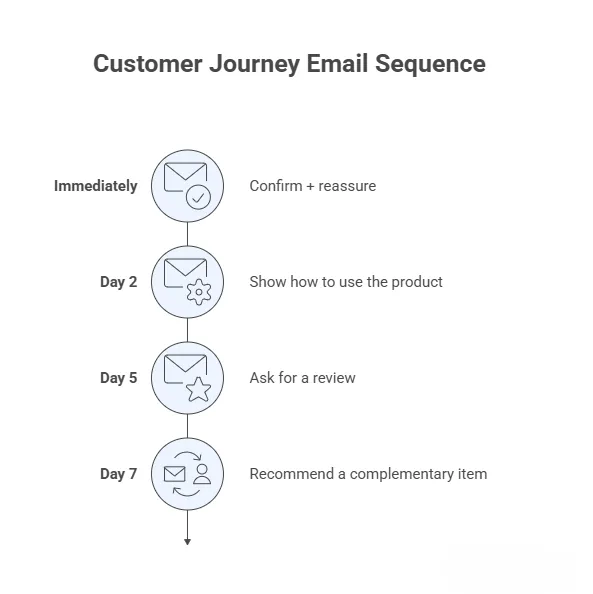
Flow Structure (3–4 emails)
Email 1: Order confirmation + thank you
Email 2: Product guide / How to get started
Email 3: Ask for review
Email 4: Smart upsell / recommendation
Summary Table
Email Template (Email 2 Getting Started Guide)
Subject: Quick steps to get the most out of your purchase
Body:
Hi {{name}},
Now that your order is on its way, here are a few tips that help new customers get comfortable quickly. These steps are simple but make a meaningful difference in your overall experience. If you want more help, my inbox is open.
Workflow 5: Win-Back Sequence
Best for: Inactive subscribers, churned users
Goal: Re-engage users, pull them back into the journey, and filter active vs inactive audiences
A good win-back flow feels gentle and empathetic. It reminds the user why they joined in the first place and offers something meaningful to bring them back.
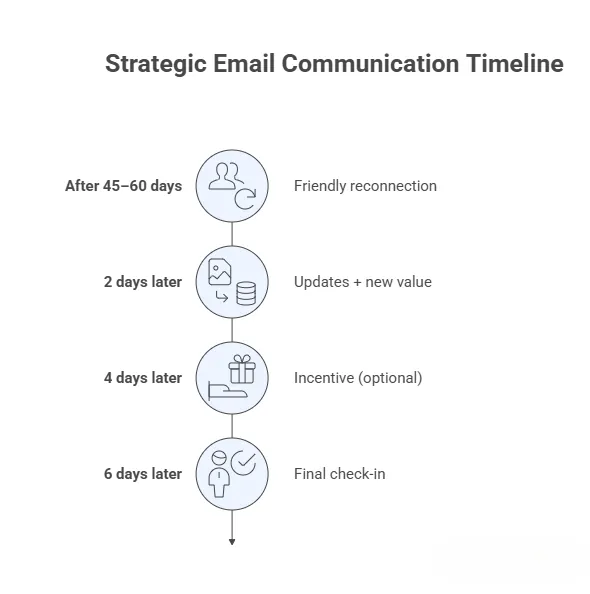
Flow Structure (3–4 emails)
Email 1: Friendly “We miss you.”
Email 2: What’s new / updated
Email 3: Incentive (optional)
Email 4: Final check-in
Summary Table
Email Template (Email 1 – Reconnect)
Subject: Still thinking of you (in a good way)
Body:
Hi {{name}},
It has been a while since we last saw you. We’ve added a few new things that you might find useful, and I thought I’d check in before assuming you moved on. If you want to continue, great. If your priorities changed, that’s okay too; you can choose what works for you.
Best Practices to Increase Conversions in Every Email Automation Workflow
Every high-performing email automation workflow shares a few habits that make the entire system more predictable and conversion-friendly. These practices help your automated email sequences feel thoughtful instead of mechanical, which directly affects how often people open, click, and act on your messages. Whether you're working on welcome journeys, abandoned cart reminders, or post-purchase nurturing flows, the following principles keep your email marketing automation strong and consistent.
1. Keep every email centered around one clear action
High-converting email automation workflows are built around clarity. If an email tries to educate, sell, upsell, and request feedback all at once, the message loses direction. Each email should stand for a single moment in the customer journey, welcoming them, reminding them, guiding them, or prompting them toward one small action. This single-focus approach naturally boosts conversions because readers know exactly what you want them to do next.
2. Use behaviour-driven triggers instead of generic schedules
The most successful triggered emails activate based on what users actually do. When a subscriber browses a category, downloads a guide, or leaves a cart behind, the timing of your automated email workflow feels personal and intentional. Behaviour-driven triggers create relevance without extra effort, and that relevance is what lifts engagement and conversion rates across all email automation templates.
3. Write subject lines that feel honest, simple, and worth opening
Subject lines don’t need to be clever; they need to feel real. Overcomplicating them usually leads to lower open rates. Clean subject lines like “Your guide is ready,” “We saved this for you,” or “Quick update about your order” often outperform dramatic ones. Good email subject lines set the tone for the rest of your workflow and play a major role in the overall conversion rate.
4. Use social proof where it naturally supports the message
Social proof is one of the strongest elements in any conversion-focused email workflow. Whether it’s a short testimonial, a review, a case study, or even a small “500+ customers chose this last month,” it reassures readers that they’re making a safe decision. Instead of pushing for a sale, your automated sequence shows that others have already trusted you, and this silent nudge often does the real work.
5. Pace your emails so the workflow feels natural, not overwhelming
Email marketing automation works best when it feels like a comfortable conversation. Sending too many emails too fast creates fatigue; sending them too slowly disconnects the journey. Each workflow has an ideal rhythm. Welcome flows feel warm when spaced out over days, abandoned cart emails work best within hours, and win-back sequences need gentle spacing. Matching timing to intent keeps the user engaged without irritation.
6. Update your workflows regularly so they never feel dated
Even the best automated email sequences lose effectiveness if they remain unchanged for too long. Offers shift, customer behavior evolves, testimonials get old, and examples need refreshing. A quick quarterly review ensures that your email automation templates stay accurate and aligned with what customers expect today. Small updates add up to big improvements in performance.
7. Test one variable at a time to improve conversions consistently
A high-converting email workflow is built on steady refinement. Instead of testing multiple elements at once, try updating only the subject line, or only the CTA, or only the timing. This makes your insights clearer and allows you to improve your workflows without guessing. Over time, these small changes grow your conversions in a way that feels stable and sustainable.
Wrap-Up: How Marketricka Helps You Build Email Workflows That Actually Convert
Email automation workflows work best when they feel personal, well-paced, and aligned with what your customers are doing in the moment. When each automated email sequence speaks to a user’s intent, whether they just subscribed, made a purchase, or went quiet, the conversation feels natural, and conversions rise without forcing anything.
If you want help designing these journeys, writing high-converting email automation templates, or setting up the entire system inside your email platform, the Marketricka team is here to support you with strategy, content, and complete workflow implementation. We make sure your emails are not just sent.