
Google Trends Limitations: Why Marketers Need Better Alternatives in 2026
Discover the Google Trends limitations in 2026 and why marketers are turning to better alternatives for accurate SEO and market insights.
 By Divyesh Savaliya
Summary:
Google Trends has been a go-to tool for marketers, SEOs, and content creators for years. It’s free, easy to use, and backed by Google’s massive search data. However, as digital marketing becomes more data-driven and competitive in 2026, many professionals are starting to question whether Google Trends alone is still enough.
While it offers helpful insights into trending topics and seasonal interest, Google Trends limitations are becoming more noticeable, especially for marketers who depend on accurate, actionable data to make decisions.
In this article, we’ll break down the key problems with Google Trends, explain why its data can sometimes be misleading, and explore why marketers are increasingly turning to more advanced alternatives.
What Is Google Trends and How Marketers Commonly Use It
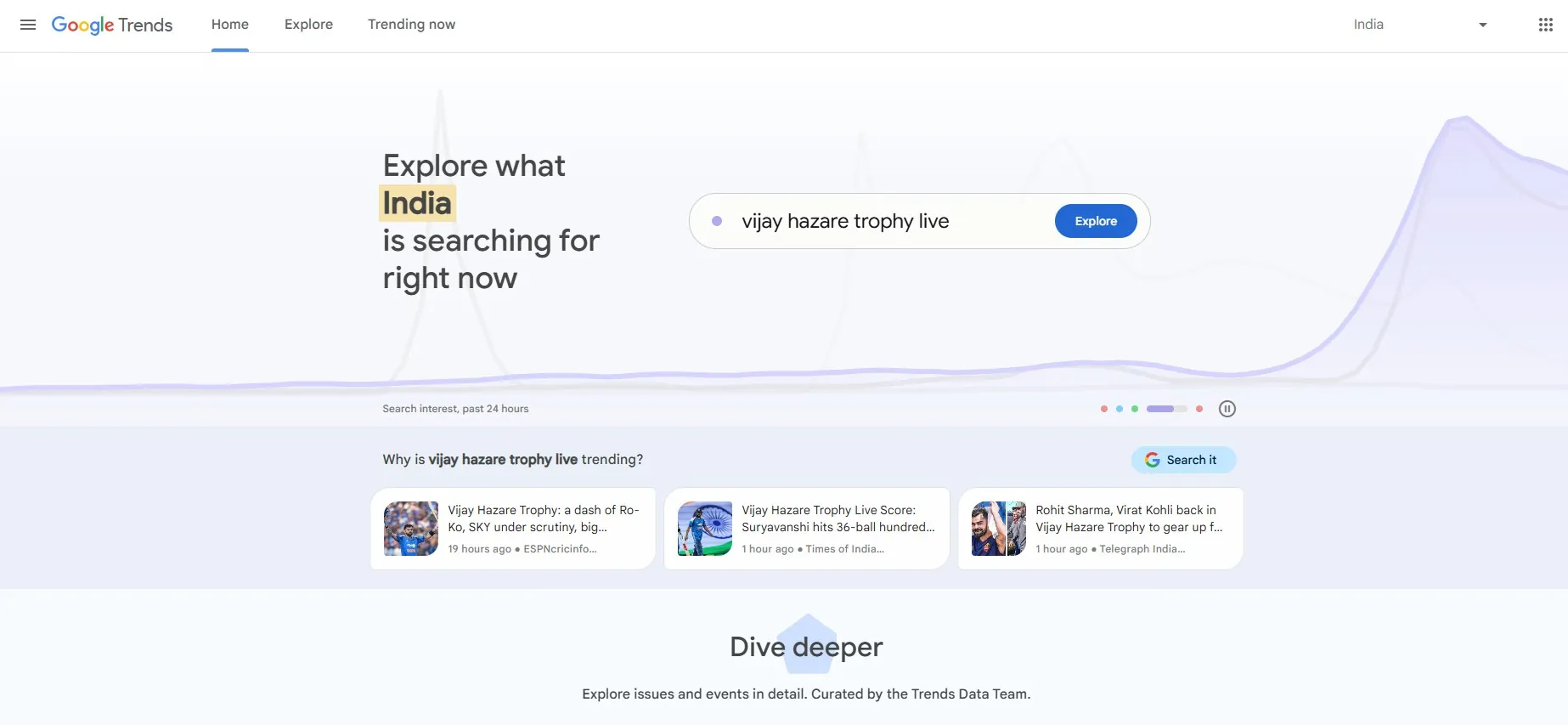
Google Trends shows how often a search term is entered relative to total search volume over time. Marketers typically use it for:
Identifying trending topics
Comparing the interest between keywords
Understanding seasonal trends
Exploring regional interest
Validating content ideas
For basic trend discovery, it still has value. But problems arise when marketers try to use it for serious SEO, keyword research, or market analysis.
Major Google Trends Limitations Marketers Face Today
1. No Access to Actual Search Volume Data
One of the biggest limitations of Google Trends is that it doesn’t provide real numbers. All data is shown on a relative scale from 0 to 100.
For example, we’ve seen keywords show strong interest in Google Trends but later turn out to have very low monthly search volume when checked in professional SEO tools. This often results in content that looks promising during research but fails to generate meaningful organic traffic after publication.
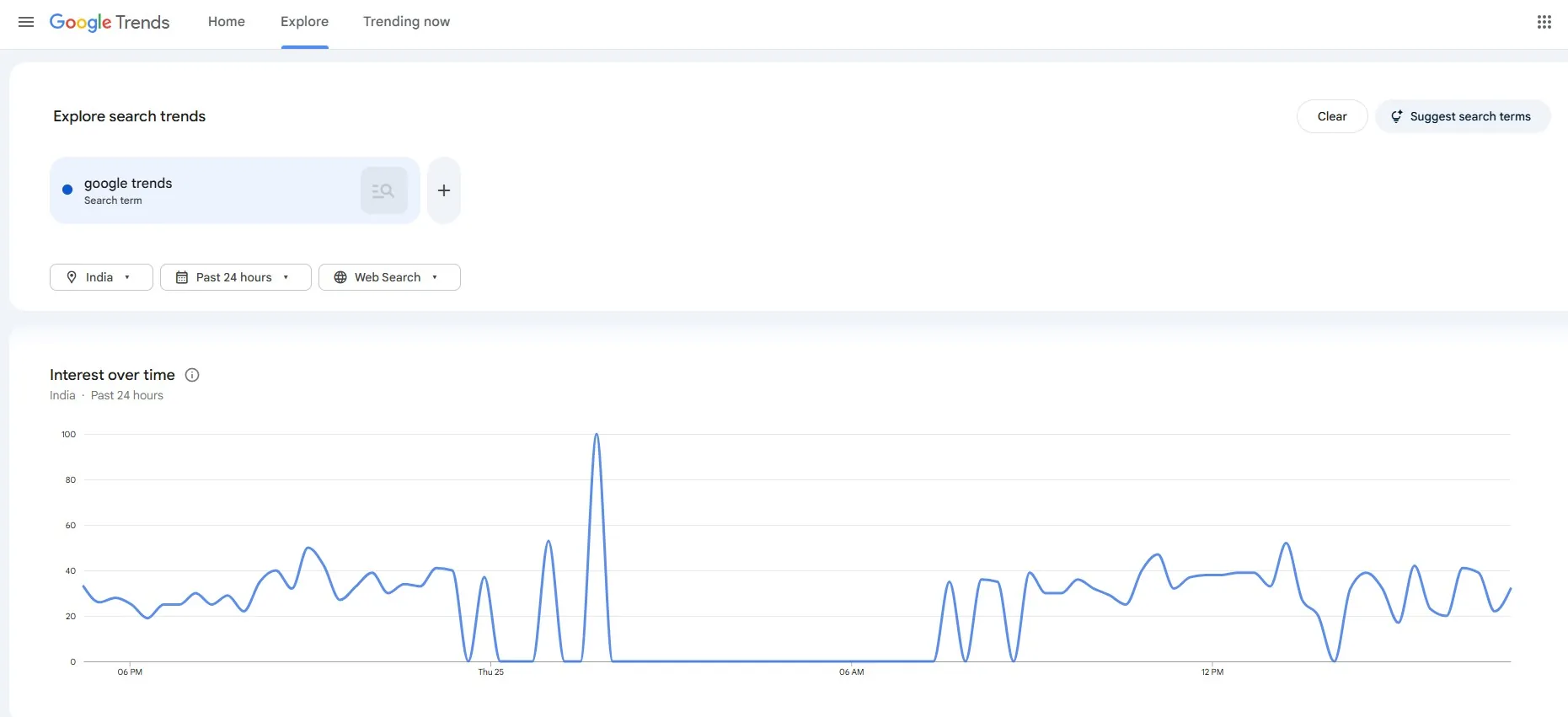
This makes it difficult to:
Estimate traffic potential
Compare keywords across different niches
Prioritize keywords based on demand
Without actual volume, decision-making becomes guesswork.
2. Accuracy Issues With Low-Volume and Long-Tail Keywords
Google Trends often struggles with long-tail keywords. Many searches simply return:
“Not enough data”
Flat or inconsistent graphs
This leads to Google Trends accuracy issues, especially for:
Niche industries
New products
Emerging search queries
For marketers targeting long-tail SEO opportunities, this is a major drawback.
3. Limited Insight Into Search Intent
Google Trends shows interest, not intent.
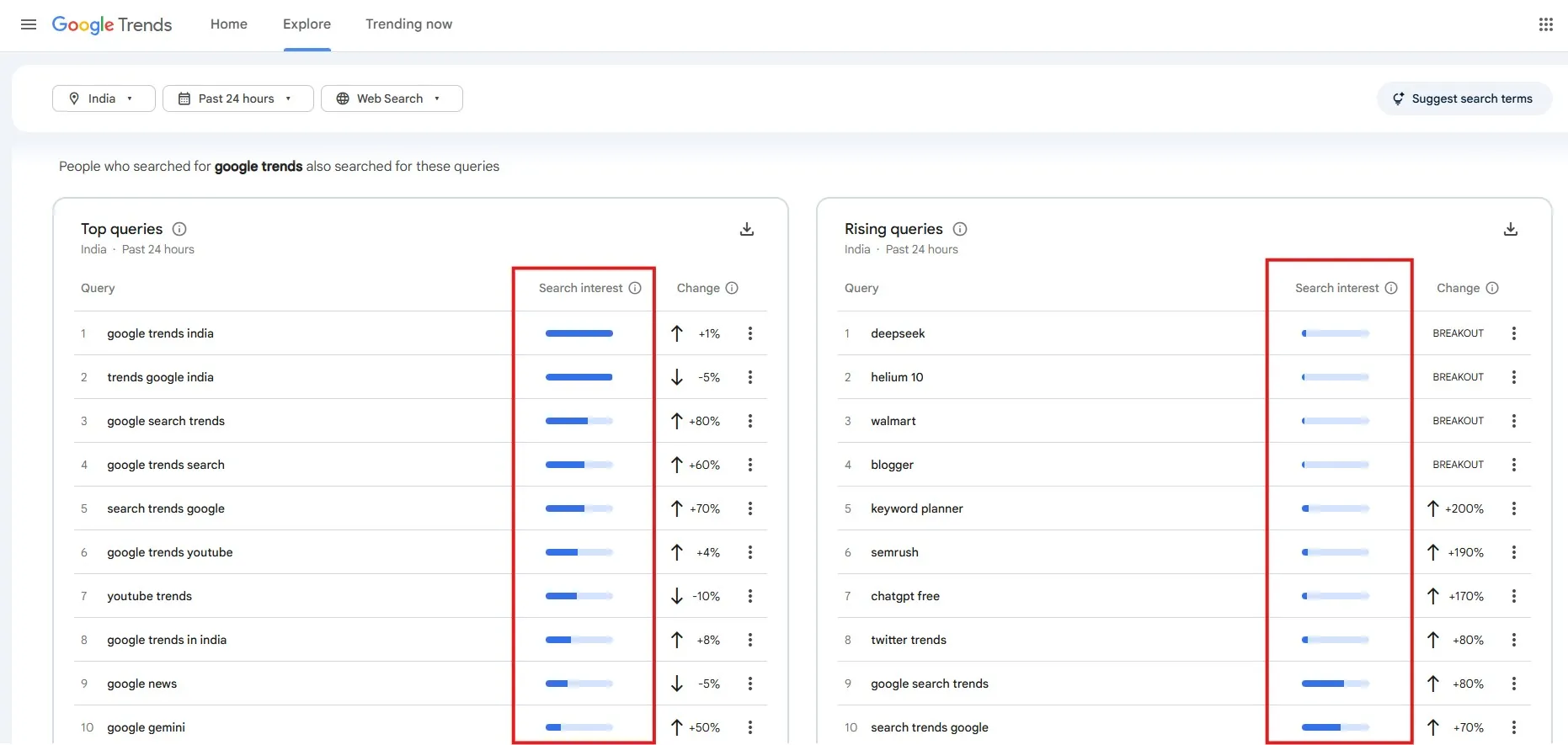
You can’t tell:
Whether a keyword is informational, commercial, or transactional
If users are researching or ready to buy
What kind of content actually ranks
Without proper search intent analysis, marketers risk creating content that doesn’t convert.
In practice, this creates a common issue where marketers target trending keywords without understanding what users actually want. We’ve seen informational keywords treated as commercial ones, leading to landing pages that rank poorly or fail to convert, simply because the intent was misunderstood.
4. Trend Spikes Can Be Misleading
Sudden spikes often look exciting, but they don’t always mean long-term demand.
A spike could be caused by:
News events
Viral social media moments
Short-term hype
Depending on these spikes without deeper context can result in content that quickly becomes irrelevant.
In real campaigns, content built around short-term spikes often loses relevance within weeks. We’ve noticed this especially with news-driven or viral keywords, where search interest drops quickly, leaving behind content that no longer attracts traffic or engagement.
5. No Competitive or Market Context
Another major Google Trends drawback is the lack of competitive insights.
You don’t get:
Keyword difficulty
CPC data
Competitor comparisons
SERP analysis
For serious market research, this lack of context limits its usefulness.
Why Google Trends Data Can Be Misleading in 2026
Search behavior has changed significantly. AI-powered search, zero-click results, voice search, and personalized results now influence how trends appear.
Because Google Trends:
Aggregates data broadly
Normalizes values
Lacks intent and competition layers
It may no longer reflect true market demand or keyword trend reliability in many industries. This is why depending on Google Trends alone can lead marketers to overestimate or underestimate opportunities.
It’s important to note that Google Trends is a Google-owned tool designed for relative trend analysis, not precise keyword forecasting or market sizing.
When Google Trends Still Works Well (And When It Doesn’t)
It Works Well For
Spotting seasonal trends
Comparing brand popularity
Exploring geographic interest
Validating early topic ideas
It Falls Short For
SEO keyword research
Content prioritization
Market sizing
Long-term strategy planning
Understanding these limits is key to using the tool responsibly.
What Marketers Should Look for in Better Alternatives
Because of these Google Trends disadvantages, marketers now look for tools that offer:
Real search volume data
Better trend data accuracy
Reliable historical search data
Keyword intent insights
Competitive analysis
Real-time trend tracking
These features help transform trend discovery into an actionable marketing strategy.
This is exactly why many professionals are now dependent on Google Trends alternatives that provide deeper SEO, content, and market insights.
Is Google Trends Enough for Modern Marketing?
Google Trends still has a place in a marketer’s toolkit, but its limitations are becoming harder to ignore in 2026.
For marketers who care about:
Accuracy
Reliability
ROI-driven decisions
Google Trends should be used as a starting point, not the final source of truth.
Understanding its limitations helps you make smarter choices and guides you toward tools that better support modern SEO and marketing strategies.
Conclusion
Google Trends still plays a useful role in identifying broad trends and seasonal interest, but its limitations make it unreliable as a standalone tool in 2026. The lack of real search volume data, intent insights, and competitive context means marketers risk making decisions based on incomplete information.
To build effective, ROI-driven strategies, Google Trends should be treated as a starting point, not the final authority. Combining it with more advanced SEO and market research tools allows marketers to turn trend discovery into accurate, actionable decisions that support long-term growth.